Key Ayurvedic Principles
- Eliminating deep toxins without preparation (Poorva Karma) can damage delicate tissues and cause severe aggravation.
- Snehana (Oleation) lubricates the micro-channels and dissolves lipid-soluble cellular toxins.
- Swedana (Herbal Steam) opens the pores and liquefies toxins so they flow smoothly toward the gut.
- At Atharva Ayurved, a rigorous 3–7 day Poorva Karma phase is mandatory for clinical safety and efficacy.
The Metaphor of the Dry Wooden Stick
In the Charaka Samhita, the ancient sage Charaka gives a profound analogy: if you attempt to bend a dry, brittle wooden stick, it will immediately snap in half. But if you patiently apply warm oil and steam it over fire, it bends effortlessly into any shape without breaking.
The same principle applies to the human physiology. Toxins (Mala and Ama) that have settled into deep tissues like bone, cartilage, and nerve sheaths cannot simply be purged. Doing so causes exhaustion, tissue dryness (Rookshata), and aggravation of Vata dosha.
“Just as oil softens a dry stick so it bends without cracking, Snehana and Swedana soften deeply rooted doshas so they leave the body safely.” — Charaka Sutrasthana
Snehana: Internal and External Medicated Oleation
Snehana is administered in two synergistic dimensions: Abhyantara Snehana (internal ingestion of increasing doses of medicated ghee on an empty stomach) and Bahya Snehana (full-body synchronized therapeutic massage using customized herbal oils).
Medicated ghee has the unique lipophilic property of crossing cell membranes, dissolving accumulated toxic residues, and carrying therapeutic herbs directly into cellular mitochondria.
Swedana: Dilating Micro-Circulatory Channels
Immediately following oleation, the patient enters our cedarwood or teakwood herbal steam chamber (Swedana). Enriched with decoctions of Dashamoola, Nirgundi, and Eranda, the steam dilates the peripheral micro-channels (Srotomukha), causing the liquefied toxins to migrate from the periphery (Shakha) back to the central gastrointestinal tract (Koshta).
Once toxins are safely centralized in the Koshta, the main expulsion procedures (Pradhana Karma)—such as Vamana, Virechana, or Basti—can be performed effortlessly and with zero patient discomfort.
Dr. S.N. Patidar
Chief VaidyaBAMS, DAFE, MSc Yoga · Chief Vaidya & Clinical Director
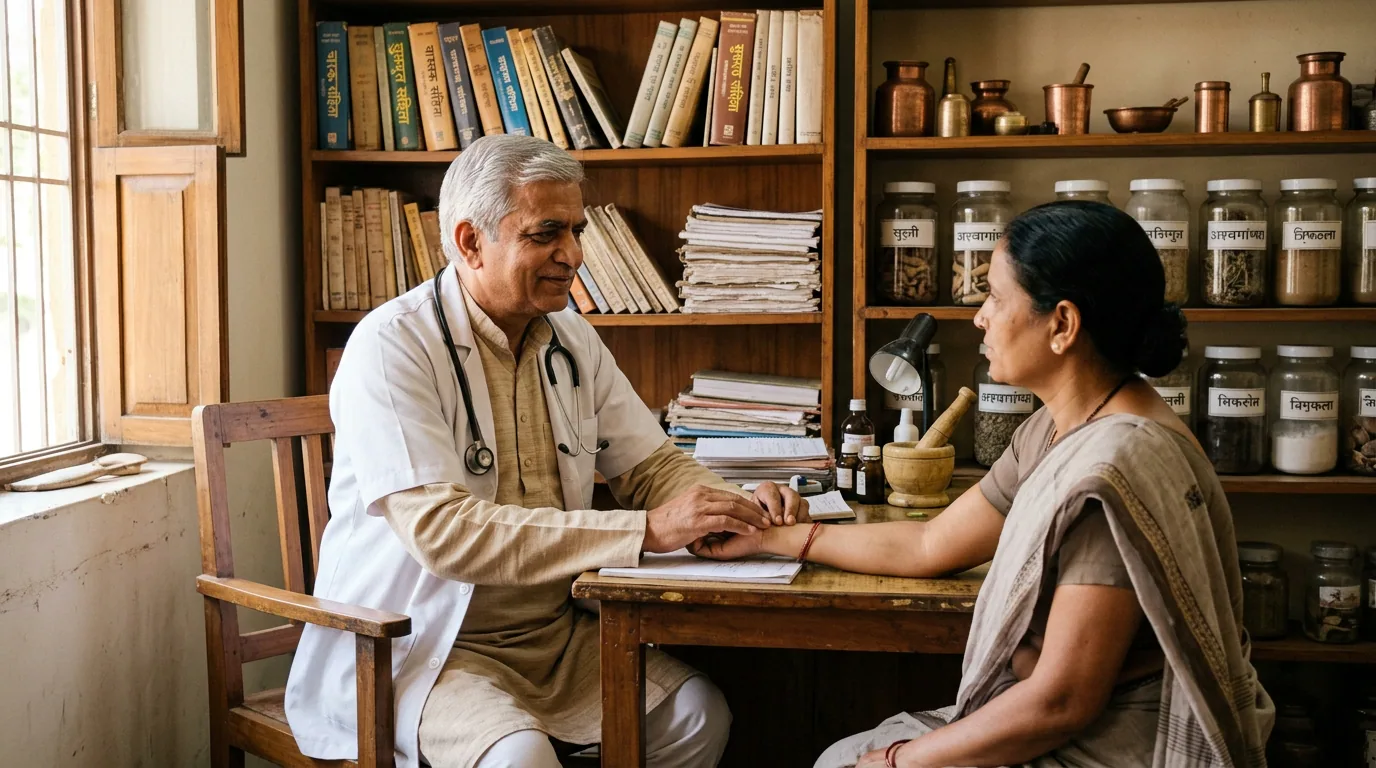
Dr. S.N. Patidar leads Atharva Ayurved in Nipania, Indore, specializing in pulse diagnostics (Nadi Pariksha), non-surgical spine rehabilitation, autoimmune condition reversal, and classical Panchakarma therapies.